

Does that sharp jolt keep you from enjoying ice cream? Or the opposite end of the spectrum: a hot coffee? Those zings lead many people to wonder “why are my teeth suddenly sensitive?” The short answer to that question is dentin hypersensitivity. There’s tons of research documenting it, and it all confirms that it’s fixable in most cases. As long as you don’t just power through it.
Between 8% and 30% of adults deal with this, most of them in their 20s to 40s. If your teeth are suddenly sensitive when they never used to be, you have plenty of company And if the pain isn’t limited to one tooth — if it feels like all your teeth hurt at once — the causes (and the urgency) can look a little different. Here’s what’s actually happening, and what to do about it.
The Quick Answer
Tooth sensitivity happens when enamel or gum tissue wears away, leaving the dentin underneath exposed. Dentin contains microscopic canals that run straight to the nerve. When something cold, hot, sweet, or acidic hits those open canals, fluid moves rapidly through them, the nerve fires, and you get that sharp, instant zing.
The most common triggers: brushing too aggressively, receding gums, acidic foods and drinks, teeth whitening, grinding, and cavities. The sections below walk through each one.
The Science of the “Zing”: Why Cold Hits Hardest
Several peer-reviewed studies link tooth pain like this to the Hydrodynamic Theory. Your dentin contains tiny canals filled with fluid, called dentinal tubules. When something stimulates exposed dentin, it messes with the fluid movement within those canals. That, in turn, activates pressure-sensitive nerve receptors near the pulp, which fire an action potential your brain reads as pain.
Cold causes the fluid to move away from the pulp faster, which is why you react more strongly to cold than heat.
7 Common Causes of Sudden Tooth Sensitivity
Sensitivity usually develops in two stages: the protective covering — enamel or cementum — is lost. Then, the tubules beneath it open up. But what drives that process?
1. Enamel Wear (Abrasion, Erosion, and Attrition)
Enamel is the hardest substance your body makes, but it breaks down through three distinct pathways:
- Abrasion: Overzealous brushing, hard-bristled brushes, or heavy pressure. A surprisingly common culprit.
- Erosion: Acid from outside the body, like that found in carbonated drinks, citrus, wine, vinegar-based foods, or acid reflux, dissolves enamel over time.
- Attrition: Tooth-to-tooth wear from grinding.
Once enamel is gone, it doesn’t come back — which is why protecting it before problems develop is always easier than treating the fallout.
2. Gum Recession
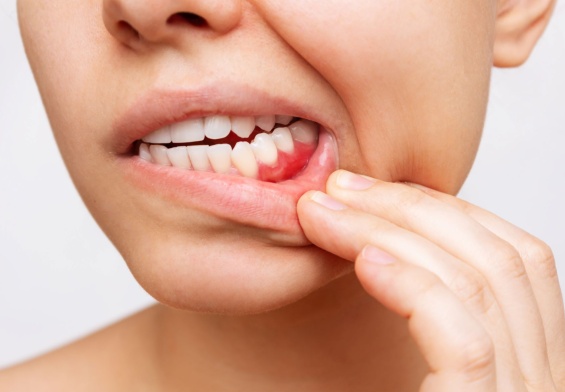
When gums pull back, they leave the root surface exposed. Roots aren’t covered by enamel, but by cementum, which is much thinner and softer. Because of that, brushing or acid does a real number on it and leaves the dentin sticking out like a sore thumb. Gum recession is one of the most common reasons patients suddenly notice widespread sensitivity.
3. Cracks and Fractures
Even a micro-crack that is invisible to the naked eye can let stimuli bypass your protective enamel. Cracked tooth syndrome usually produces sharp, intermittent pain when biting down or releasing pressure, rather than the generalized sensitivity that comes from enamel wear.
4. Teeth Whitening
Whitening agents (usually hydrogen or carbamide peroxide) penetrate enamel and can reach the pulp, causing temporary inflammation. The sensitivity is usually sharp, appears in the first day or two after treatment, and fades on its own. If it lasts longer than a week, that warrants a call to your dentist. It’s also worth knowing that several common beliefs about whitening — including how much damage it actually causes — don’t hold up to scrutiny.
5. Grinding (Bruxism)
Clenching and grinding put tons of strain on your teeth. Over time, this leads to abfraction, wedge-shaped notches near the gum line, and increases pressure within the pulp itself. Both effects amplify how much fluid moves through the dentinal tubules. When that happens, your teeth feel hyper-sensitive even without visible enamel damage.
6. Cavities
Once decay passes the dentin-enamel junction, the tooth reacts strongly to sweets, temperature, and pressure. This might feel like a brief twinge at first. But as the cavity deepens toward the pulp, the pain can transition from sharp and quick to dull and lingering. That’s an indicator the cavity’s proliferating beyond simple sensitivity. .
7. Sinus Pressure
The roots of your upper back teeth sit directly beneath your sinus cavities. A sinus infection or even bad seasonal congestion can create pressure and inflammation that affects those teeth. If you notice sensitivity in your upper molars and you have been dealing with sinus issues, they could be connected. It usually clears when the sinus problem does.
Sensitivity vs. a Bigger Problem: How to Tell the Difference
But not every tooth twinge is simple dentin hypersensitivity. There are two major factors that distinguish tooth sensitivity from something much more urgent:
- Dentin hypersensitivity: Sharp, brief, and immediate. The pain starts the moment the trigger hits and disappears just as fast when you remove it.
- Pulpitis (nerve inflammation): Dull, throbbing, or continuous. Lingers after the stimulus is gone. May wake you up at night. This points to an inflamed or dying nerve and needs professional treatment. A desensitizing toothpaste won’t cut it.
You can test this yourself by holding a glass of water against the tooth in question. If the pain goes away when you remove the glass, that’s normal sensitivity. If it hangs around, it’s something more serious that necessitates seeing a dentist. And whatever you do, don’t downplay it at your next appointment — there are things patients routinely hide from their dentist that end up making treatment far more complicated than it needed to be.
At-Home Relief: What Actually Works (and What Makes It Worse)
What works
- Potassium nitrate toothpastes: Potassium ions travel through dentinal tubules to the pulp, where they prevent the nerve from firing repeatedly. Takes 2 to 4 weeks of consistent use to feel results.
- High-fluoride products: Fluoride precipitates minerals on the dentin surface, physically blocking open tubules. Your dentist can prescribe higher concentrations than what is available over the counter.
- Nano-hydroxyapatite toothpastes: These particles are structurally similar to natural enamel mineral and can partially plug exposed tubules. A strong option for patients who prefer fluoride-free products.
- Arginine and calcium carbonate: Mimics the way saliva naturally seals tubules by forming a protein-mineral plug. Found in several sensitivity formulas.
- Straws and water: Using a straw limits acid contact with tooth surfaces. Rinsing with water after acidic meals neutralizes pH before it can continue dissolving enamel.
What makes it worse
- Whitening or highly abrasive toothpastes: These speed up enamel loss and open more tubules.
- Scrubbing harder: More pressure does not mean cleaner teeth. It actually speeds up gum recession.
- Continuing acidic foods while using desensitizing toothpaste: Acid dissolves the tubule plugs that the toothpaste creates, leaving you in a loop with no real progress.
When to See a Dentist
Home care can only get you so far. Get a professional evaluation if any of these apply:
- The pain is spontaneous, throbbing, or wakes you at night.
- Sensitivity is concentrated in one specific tooth that also hurts to bite on.
- Eating or sleeping is affected.
- Four weeks of desensitizing toothpaste has not helped.
In-office options go well beyond what you can do at home. Professionals can apply fluoride varnishes, bonding agents that seal exposed dentin, laser treatment that glazes tubule openings, and gum grafts to permanently cover exposed roots. The right choice depends on what is actually driving the problem. It also helps to go in prepared — knowing what to avoid before a dental appointment can make the exam more accurate and the visit more efficient.
The dentists at The Silverstrom Group take a complete health approach to diagnosis — looking beyond the immediate symptom to find what is driving it, whether that is diet, bite issues, or something systemic.
Key Takeaways
- Sensitivity is an exposure problem. Enamel or gum tissue has failed, leaving porous dentin accessible to triggers.
- The pain is caused by fluid movement. Stimuli shift fluid through dentinal tubules, activating the nerve.
- Prevention is easier than treatment. Switch to a soft-bristled toothbrush, cut back on acidic foods, and keep up with regular dental cleanings.
- Desensitizing products need time. Potassium nitrate formulas typically require 2 to 4 weeks before you notice a difference.
- Know the red flags. Lingering or throbbing pain is not sensitivity — it is a sign the nerve may be involved and needs professional care.
Fixing Why Your Teeth Hurt Suddenly
Sudden tooth sensitivity is worth paying attention to. It’s rarely dangerous on its own, but it almost always points to something that will get worse if left alone. That could be enamel erosion, gum recession, or an early cavity that has not made itself obvious yet.
Most causes are very fixable. Catch them early, adjust a few habits, and use the right products consistently, and most people get back to eating and drinking without bracing themselves. When home care is not enough, a dentist can pinpoint the exact source and close it permanently, in many cases. The sooner you go, the simpler the fix tends to be.
Resources
- Wibowo, Gustantyo & Chuan, How & Halim, Susanna. (2025). Dentin Hypersensitivity: A Literature Review. Jurnal Penelitian Pendidikan IPA. 11. 131-140. 10.29303/jppipa.v11i5.10995.
- Garoushi, Sufyan. (2015). Dentine Hypersensitivity: A Review. Dentistry. 05. 10.4172/2161-1122.1000330.
- CDC (2024). About Oral Health.
- Dionysopoulos D, Gerasimidou O, Beltes C. Dentin Hypersensitivity: Etiology, Diagnosis and Contemporary Therapeutic Approaches—A Review in Literature. Applied Sciences. 2023; 13(21):11632. https://doi.org/10.3390/app132111632
- Davari A, Ataei E, Assarzadeh H. Dentin hypersensitivity: etiology, diagnosis and treatment; a literature review. J Dent (Shiraz). 2013;14(3):136-145.
- American Dental Association (2026). Sensitive Teeth — Heat and Cold Sensitivity.
- Mayo Clinic (2024). Sensitive teeth: What treatments are available?