
A smile change can start with one small frustration. The light catches on the chip in a tooth. A stained tooth stands out from the rest. A weakened tooth announces its presence every time someone bites down. These are usually when people start comparing: “Should I get crowns or veneers?”
Both options can improve the way a tooth looks. But they don’t solve the same problems. Veneers usually focus on the visible front surface of a tooth. Crowns cover the entire tooth and are often used when strength or protection is part of the plan.
For teeth that are healthy but uneven, chipped, or deeply stained, dental veneers can improve the visible front surface without covering the whole tooth. However, appearance and oral health have more in common than people may realize. A tooth that looks like a cosmetic concern may still need a general dental exam first, which is why the difference between a cosmetic dentist and regular dentist can shape the first conversation.
Crowns vs Veneers: The Main Difference
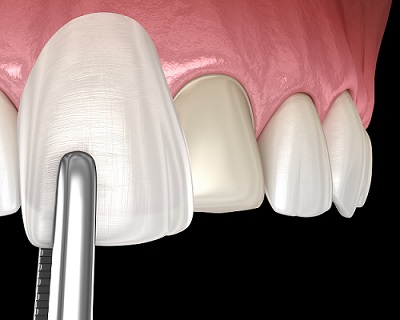
A veneer covers the front surface of a tooth. A crown fits over the entire tooth, more like a cap. Thus, they have different use cases. Veneers tend to be used for more cosmetic issues, while crowns are used when a tooth has cosmetic and functional needs.
MouthHealthy, the American Dental Association’s patient resource, describes veneers as custom-made coverings for teeth that are designed to look natural. Cleveland Clinic describes crowns as tooth-shaped caps that restore decayed, broken, weak, or worn-down teeth.
So it really comes down to a simple question. What does the tooth need more? A better-looking front surface, or more functional support?
What Veneers Change About a Smile
Veneers are often used when the tooth is generally healthy but the patient’s not satisfied with the front surface. They can improve chipped, stained, misshapen, or slightly crooked teeth, as well as those separated by small gaps.
Most patients worry about more than just the final look. Anticipating what the appointment can feel like, and whether veneers are painful to get, can feel daunting. But at that appointment, they decide on porcelain or composite veneers. Porcelain veneers are thin shells made for the front surface of teeth. Composite veneers use tooth-colored filling material bonded to the tooth.
Composite veneers may require less enamel removal and fewer dental visits. Porcelain veneers are often chosen for a stronger, more natural-looking result, but are usually more expensive.
What Crowns Change About a Tooth
A crown covers more tooth structure than a veneer. Cleveland Clinic compares it to a snug hat that fits over the entire tooth. They provide support to weak, broken, decayed, worn down, or previously root-canaled teeth. When a tooth needs that support as much as appearance, dental crowns are usually a better fit. More of the natural tooth is covered and protected.
Crowns can also cover severely stained or discolored teeth. The difference is that a crown is not only changing the front view. It’s also helping restore the tooth’s structure and chewing function.
That is why a crown may be discussed for a back tooth, a cracked tooth, or a tooth with a large old filling. Dentists need to account for what the tooth needs to handle, as well as how they appear in photos.
When Veneers May Be the Better Choice
Veneers may be the better fit when the tooth is healthy enough and appearance is the main concern. The tooth may be stained, slightly uneven, chipped, worn, or shaped differently from nearby teeth.
Discoloration doesn’t always mean damage. Before assuming someone needs a veneer or crown, they should consider whether stained teeth are unhealthy teeth or simply a cosmetic concern. Tooth health is always the priority. If veneers are on the horizon, decay, gum disease, and other dental issues should be treated before they’re placed.
It’s easy to forget that with mainly cosmetic concerns. A tooth could be a great veneer candidate, but still need a filling or root canal first.
Stains, Chips, Gaps, and Uneven Front Teeth
Veneers often make the most sense for front teeth because those are the teeth people see when someone smiles or speaks. A small chip on a front tooth may not need full coverage if the rest of the tooth is healthy
Veneers can also improve small gaps or uneven edges in some cases. The goal is to make the visible teeth look more balanced without treating the tooth like it is structurally broken.
MouthHealthy notes that veneer treatment is not reversible because enamel is removed to place the veneer. That makes them a long-term cosmetic decision in most cases. As such, they need to be made with care and the decision should always involve a licensed dentist. Patients should know how the appointment, temporary stage, and future maintenance work before comparing veneers with crowns.
That’s where what to know before getting dental veneers becomes part of the bigger decision, not just a side question.
When Crowns May Be the Better Choice
Crowns may be the better fit when a tooth needs more than a cosmetic change. A tooth that is cracked, weakened, badly worn, or heavily filled may need full coverage to hold up to chewing.
A dentist may bring up a crown when there is not enough strong tooth structure left for a smaller repair. That can happen with weak teeth, cracked teeth, broken or worn-down teeth, root canal-treated teeth, or teeth restored with implants.
But not every damaged-looking tooth needs a crown. Dentists will look at how much healthy tooth remains and how much pressure that tooth takes during biting. Remember, veneers make the outward appearance look better, but they can’t provide the same functional coverage as a crown.
Damage, Decay, Large Fillings, and Weak Teeth
A tooth with a large filling can look fine from the outside and still be weaker than it used to be. If there is not enough healthy tooth left, a veneer may not solve the real problem. The same goes for cracks. Thin crack lines may be hard to see, but chewing pressure can cause pain or further damage to the tooth.
Back teeth also take heavier chewing force than front teeth. Thus, appearance is almost never the sole concern. If a tooth already has other treatments or issues, the dentist may need to fix the issues before considering any cosmetics.
Crowns vs Veneers for Cost, Longevity, and Tooth Prep
Cost, tooth preparation, and long-term care also factor into the decision. Exact costs vary, so the better first question is what each treatment requires from the tooth.
Veneers usually involve removing some enamel from the front and sides of the tooth. For porcelain veneers, the process may include tooth preparation, an impression or digital scan, a temporary veneer, and final bonding after the fit and shape are checked.
Crowns usually need more reshaping because the crown has to fit over the whole tooth. Some enamel is removed before the crown is bonded in place.
Neither option is maintenance-free. Both veneers and crowns can chip, crack, loosen, wear down, or need repair over time.
Why Whitening or Bonding May Come First
Sometimes crowns and veneers are not the first step. If the main concern is surface staining, professional teeth whitening may be the simpler first conversation before changing the shape of a tooth.
Whitening will not change every kind of discoloration. It also will not change the color of restorations the same way it changes natural enamel. Bonding may be another option for small chips or minor shape issues. A dentist can explain whether bonding, whitening, veneers, or crowns fit the tooth better.
This is one reason treatment planning should start with an exam, not just a photo. A tooth that looks like a cosmetic case may have bite wear, enamel loss, or decay that changes the plan.
How to Choose the Right Direction
The best choice often depends on whether the tooth needs a cosmetic change, a structural repair, or a mix of both.
For example, a patient may want brighter front teeth, but the dentist may first need to check enamel, bite pressure, and old dental work. In a broader smile plan, cosmetic dentistry options may include veneers, crowns, whitening, bonding, or more than one treatment used together.
Veneers may fit when the tooth is healthy and the issue is mostly on the front surface. Crowns may fit when the tooth needs strength, protection, or full coverage.
A patient comparing crowns and veneers can ask a few practical questions:
- Is the tooth healthy enough for a veneer?
- Does the tooth need more strength?
- Is the concern mostly color, shape, or size?
- Is there decay, cracking, or a large old filling?
- Would whitening, bonding, or orthodontic treatment make more sense first?
The answers won’t be the same for every tooth. Someone could need a veneer on one tooth and a crown three teeth to the left. They could also need whitening across the whole mouth before either cosmetic can match the final smile.
Common Questions Patients Ask Before Choosing
Are crowns or veneers better?
Neither is automatically better. A veneer may fit a healthy front tooth with a cosmetic concern. A crown may fit a tooth that has to handle damage, decay, heavy wear, or a large old filling.
Do veneers last as long as crowns?
Both can last for years, but neither lasts forever. Crowns commonly last several years with proper care, and veneers may chip, crack, loosen, wear down, or need repair or replacement over time.
Are crowns more painful than veneers?
The bigger difference is tooth reshaping, not pain. Crowns usually need more reshaping because they cover the whole tooth. Some sensitivity after crown placement can be normal, especially to heat and cold.
Can I whiten my teeth instead of getting veneers or crowns?
Sometimes, yes. Whitening may help when the concern is surface staining, but it may not solve deeper discoloration, damaged tooth structure, chips, gaps, or shape issues.
Can veneers or crowns fix crooked teeth?
They can improve the appearance of mild unevenness or shape concerns. They do not move teeth the way orthodontic treatment does, so a dentist may recommend another option if alignment is the main concern.
What to Ask Before Choosing Treatment
Crowns and veneers ask different things of the tooth.
A patient should ask whether the tooth is healthy enough for a veneer, whether it needs full coverage, and whether whitening or bonding should come first. It also helps to ask how much enamel will be removed and how the choice may affect future dental care.
The better treatment is the one that fits the tooth in front of the dentist, not just the smile goal in the patient’s mind.