
Dental implants in NJ can be a daunting plunge to take, so many people research them to calm the pandemonium in their minds. “How long do dental implants take?” is a commonly asked and certainly valid question. Many patients expect them to work like veneers or bridges, then are surprised to learn the process takes several months.
If you are just starting your research, this overview of what no one tells you about dental implants in NJ can help clarify common misconceptions early on.
But understanding dental implant recovery times in New Hersey helps temper your expectations to a realistic level before treatment begins.
Dental implants need to fuse with your jawbone to function. That’s a serious biological process that takes time and can’t be rushed. Thus, your biology has a greater influence on treatment length than scheduling or technology.
Quick Answer: How Long Does the Dental Implant Process Usually Take?
For most patients, the dental implant process takes about 3 to 6 months from implant placement to the final crown. This healing period allows the implant to fuse with the jawbone, a process called osseointegration. If you need bone grafting or extra healing it may take longer, while some patients heal sooner depending on bone health and recovery response.
This timeline reflects how many months dental implants need to heal safely and predictably. Rushing the process can increase the risk of implant failure, which is why most dentists follow a staged approach. Patients who want a broader understanding of treatment options may also find this comprehensive guide to dental implants helpful for comparing procedures and expectations.
Dental Implant Timeline at a Glance for NJ Patients
- Consultation and planning: 1–4 weeks
- Implant placement surgery: 1 day
- Osseointegration (healing): 2–4 months
- Abutment placement: ~2 weeks
- Final crown placement: 1 visit
This overview reflects the average experience, not a guarantee. Individual timelines vary based on health and anatomy.
Why Does the Dental Implant Process Take Several Months?
Dental implants take longer because they’re not surface-level restorations like bridges or veneers. They’re actual medical devices that replace tooth roots, and have to weather years of chewing pressure. You can’t get that stability without a significant time investment.
According to the U.S. Food and Drug Administration, healing after implant placement can take several months or longer. Skipping or shortening this phase makes the implant more likely to fail.
Bone is very slow to heal. Your jaw needs to adapt to the new implant
Step-by-Step Dental Implant Timeline: What Happens at Each Stage
1. Initial Consultation and Planning for Dental Implants
This stage focuses on evaluation and planning. Your dentist reviews your medical history, examines your gums, and evaluates bone quality using imaging. They’ll figure out if implants are the right fit and if so, where to place them.
Implants can’t go on top of damaged teeth, so any present need removal before proceeding. Many dentists allow the extraction site to heal for several weeks before implant surgery to reduce inflammation.
This planning phase helps avoid complications later. It is one of the most important steps in successful dental implants in NJ. During this stage, dentists also determine whether implants are appropriate at all, which is explained in more detail in this guide on whether dental implants are right for you.
2. Dental Implant Surgery: Placing the Implant in the Jawbone
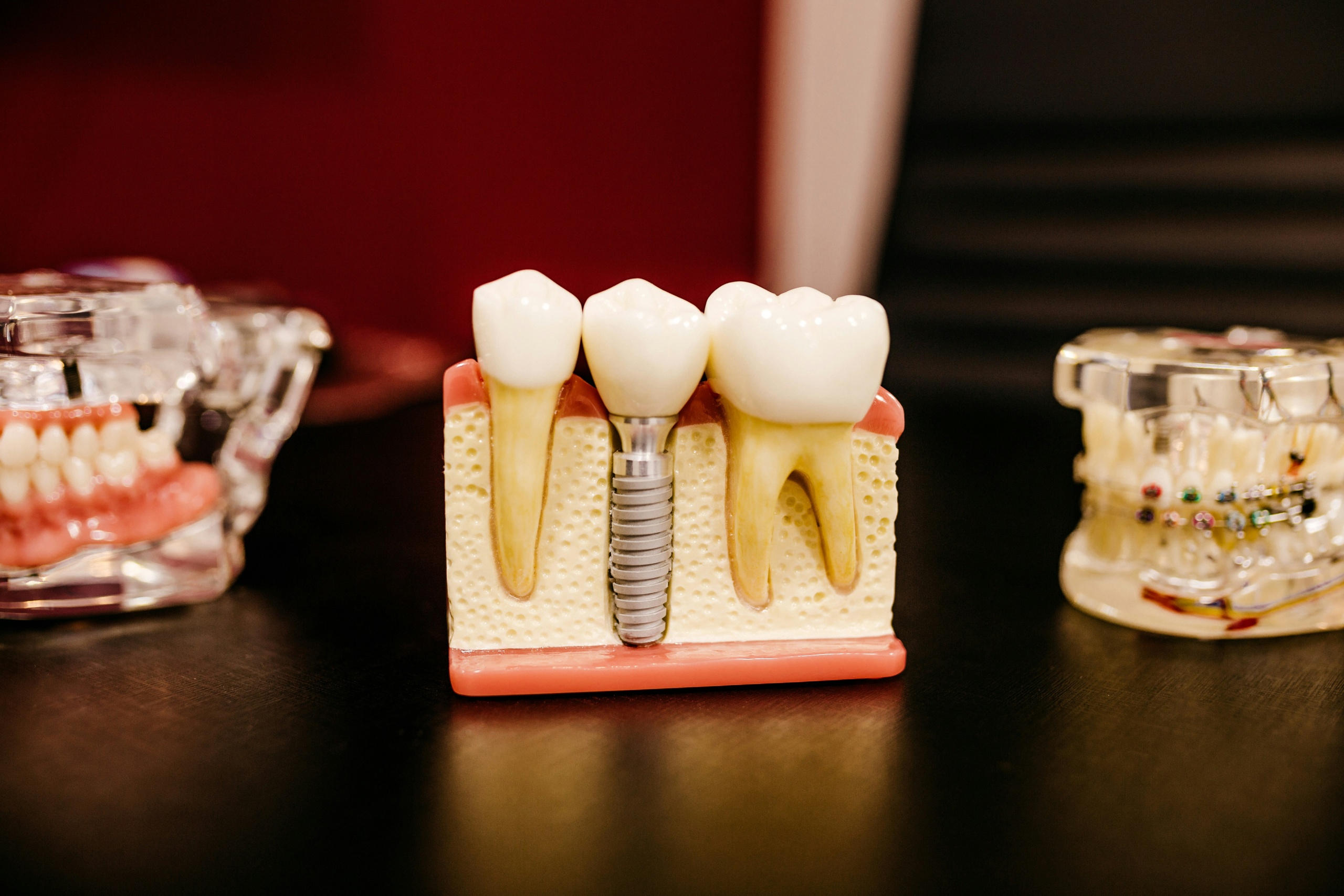
Implant surgery involves placing a small titanium post into the jawbone. This is the artificial root the replacement tooth grows out of. The procedure is usually done with local anesthesia.
Most patients describe the recovery as manageable. Swelling and soreness are common for a few days but usually mild.
According to clinical guidelines followed by most implant dentists, many patients return to work within a short time. Recovery is often easier than expected.
3. Healing and Osseointegration: How the Implant Fuses With Bone
Osseointegration is the process that determines how long dental implants take. During this phase, bone cells grow and attach directly to the implant surface. This creates the strength needed to support a crown.
Peer-reviewed dental research shows that early bone contact begins within weeks. But, mature bone capable of handling chewing forces develops over several months.
Dentists usually allow 2 to 4 months or more for this process. Giving the bone enough time greatly improves long-term success.
Why Osseointegration Takes Time and Cannot Be Rushed
Bones heal in stages. The body stabilizes the implant first. Then, early bone is replaced with stronger, more mature bone over time. Rushing through this process can manifest serious complications.
Applying pressure too early can shift the implant. Even the slightest movement can disrupt the bone bonding and cause implant failure. This risk is even higher in patients with gum disease, which is why understanding the connection between periodontal disease and dental implants is so important before treatment begins.
Remember, speed is often the antithesis of implant success. Dentists focus on bone stability, not speed.
4. Abutment Placement: Preparing the Implant for the Crown
Once the implant is fully integrated, dentists attach an abutment. This small connector extends above the gumline and supports the final crown. The procedure is minor and brief.
After placement, the gum tissue heals around the abutment. This usually takes about two weeks.
This step prepares the implant for the visible tooth portion. It also helps shape the gumline for a natural appearance.
5. Final Crown Placement: Completing the Dental Implant Process
The final crown is custom-made to match your natural teeth. Cosmetic dentists secure it to the abutment once it’s fully healed. Then, they fine-tune the bite and comfort.
This is the point where the dental implant functions like a natural tooth. Patients can eat, speak, and smile normally.
This marks the completion of the dental implant process.
Can the Dental Implant Process Be Faster for Some Patients?
Some patients qualify for shorter timelines. Early or same-day loading may be possible when bone quality is excellent and implant stability is high. But, the threshold for patients to qualify is astronomical.
Peer-reviewed clinical studies show that modern implant surfaces and advanced grafting techniques can shorten healing to 2 or 3 months in certain patients. These approaches need precise planning.
Faster doesn’t always mean better. Stability always comes first.
Why Faster Dental Implant Treatment Is Not Right for Everyone
Not all bone heals at the same rate. Patients with low bone density, gum disease, or medical conditions often need longer healing. Rushing treatment makes things riskier in these cases.
According to clinical research, individualized timelines lead to higher success rates than accelerated protocols. Conservative planning protects long-term outcomes.
A slower approach often prevents future complications. Patience pays off.
Factors That Affect How Long Dental Implants Take in NJ
| Factor | How It Influences Timeline |
| Bone quality | Lower density bone heals more slowly |
| Bone grafting | Minor grafts heal quickly; major grafts add time |
| Implant location | Lower jaw often heals faster than upper jaw |
| Smoking | Slows healing and increases failure risk |
| Medical conditions | Diabetes and immune disorders may extend healing |
According to FDA guidance, health plays a significant role in implant success.
How Bone Grafting Can Affect the Dental Implant Timeline
If the jaw doesn’t have enough bone to safely support an implant, dentists may use bone grafting. It can make treatments longer, but it does improve stability and longevity.
Peer-reviewed studies on bone augmentation show that grafted areas often heal predictably within a few months. In some cases, dentists can still place implants earlier than patients expect.
Don’t look at grafting as a setback. It’s often the differentiator that makes dental implants in NJ possible.
Recovery Time and Healing Expectations for NJ Dental Implant Patients
Most patients are surprised by how manageable implant recovery feels. Discomfort is usually mild and temporary. Over-the-counter pain medication is often enough.
Swelling typically peaks early and resolves within a week. Normal routines usually resume quickly.
Following aftercare instructions helps healing stay on track.
Temporary Teeth Options During the Dental Implant Healing Phase
Patients often worry about living without teeth during healing. Temporary solutions are commonly used to maintain appearance and function. These may include partial dentures or temporary crowns.
Temporary restorations protect the implant site. They also help patients feel comfortable socially during treatment.
Are Dental Implants Worth the Time and Healing Process?
Dental implants provide benefits other options cannot. They preserve jawbone, support facial structure, and function independently. Unlike bridges, they do not rely on neighboring teeth. For older adults weighing alternatives, this comparison of dentures vs. implants as smile solutions for seniors can help clarify long-term differences.
Long-term studies consistently show high success rates when patients respect the proper healing time. For many patients, implants last decades.
The time investment supports long-term oral health.
Key Takeaways About the Dental Implant Timeline
- Dental implants usually take 3–6 months from placement to final crown
- Osseointegration is the main reason for the healing period
- Some patients qualify for faster timelines, but not everyone
- Bone health and medical history influence treatment length
- Proper healing improves long-term success
How NJ Patients Can Move Forward with Dental Implants
Patients considering dental implants in New Jersey often ask whether the timeline is worth it. Each stage of the process serves a purpose tied to long-term success. When healing is respected, implants offer durable, natural-looking results that can last for many years.
Resources
Albrektsson T, Tengvall P, Amengual L, Coli P, Kotsakis GA, Cochran D. Osteoimmune regulation underlies oral implant osseointegration and its perturbation. Front Immunol. 2023;13:1056914. Published 2023 Jan 24. doi:10.3389/fimmu.2022.1056914
Fairbairn P, Leventis M. Protocol for Bone Augmentation with Simultaneous Early Implant Placement: A Retrospective Multicenter Clinical Study. Int J Dent. 2015;2015:589135. doi:10.1155/2015/589135
Food and Drug Administration – Dental Implants: What You Should Know
Ku JK, Lim JH, Lim JA, Um IW, Kim YM, Yun PY. Reducing Healing Period with DDM/rhBMP-2 Grafting for Early Loading in Dental Implant Surgery. Tissue Eng Regen Med. 2025;22(2):261-271. doi:10.1007/s13770-024-00689-3
Pandey C, Rokaya D, Bhattarai BP. Contemporary Concepts in Osseointegration of Dental Implants: A Review. Biomed Res Int. 2022;2022:6170452. Published 2022 Jun 14. doi:10.1155/2022/6170452