
Dental implants cost New Jersey patients anywhere from $3,000 to $6,000 for a single complete tooth, but that range tells you almost nothing on its own. An office quoting the post at $1,500 and an office quoting a complete implant at $4,800 are measuring different things. Knowing what goes into the price, and what moves it, is what makes the consultation actually mean something.
What Dental Implants Cost New Jersey Patients for a Single Tooth
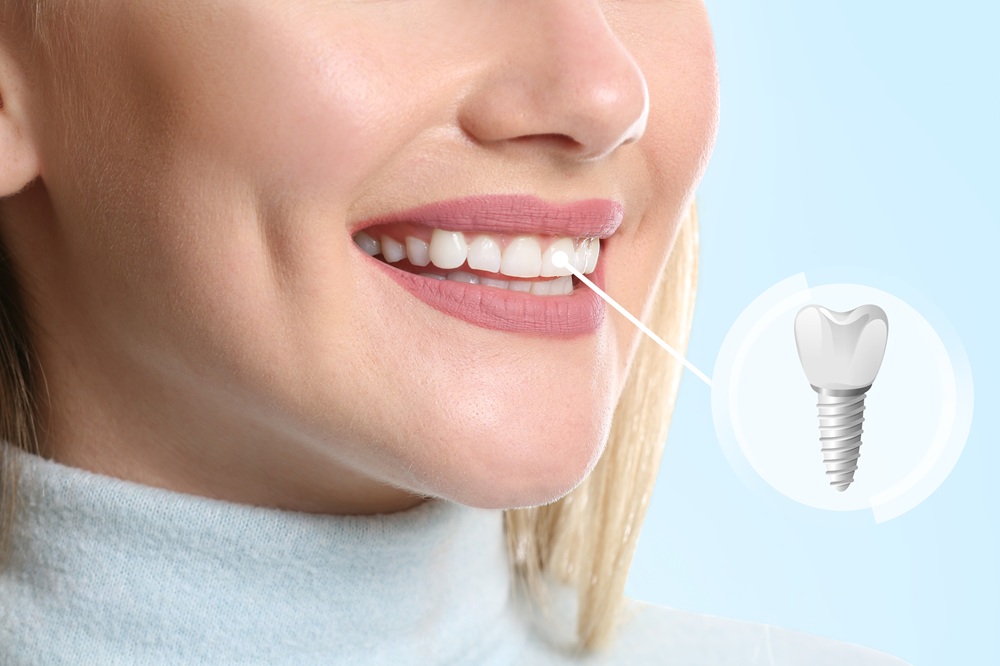
A dental implant is three separate components, and not every office quotes all three together. The implant post is the titanium piece placed into the jawbone, the artificial root, and runs roughly $1,000 to $2,000. The abutment connects the post to the visible tooth above the gumline and adds $300 to $500. The crown is the porcelain tooth the patient sees, and it costs another $1,000 to $2,000 depending on whether the lab makes it or the office does.
The dental implants cost New Jersey patients pay for all three combined runs $3,000 to $6,000. Penn Dental Medicine puts a single-tooth replacement at $3,000 to $4,500. Quotes below that need a follow-up, since some offices advertise implant placement and mean only the post.
Why the Same Implant Costs More in New Jersey
Commercial rents, staffing, and malpractice insurance run considerably higher in northern New Jersey than in most states. Offices in Morris County or Union County that invest in cone beam CT imaging, digital surgical guides, and same-day in-office fabrication carry real overhead on top of that. That technology reduces surgical errors and the likelihood of needing corrective work six months later. Patients pay for it whether or not the quote itemizes it.
The Variables That Move the Price
The Most Common Surprise: Bone Loss and Grafting
When a tooth went missing a year or more ago, the jawbone in that area starts to resorb. The body stops sending the calcium and phosphorus that once supported the root. An implant needs enough bone to fuse to. Without it, the dentist will need to graft before the post goes in.
Depending on how much bone the jaw has lost, grafts add $300 to $3,000 to the total. On top of that, upper back teeth sometimes require a sinus lift, a separate procedure with its own cost. A large-scale analysis of over 158,000 implants published in the British Dental Journal found that grafting does not increase failure risk. It also improves mechanical stability by restoring the bone volume the implant needs. Patients who hear a graft recommendation and look for a way around it are usually not going to find one. The cosmetic results dental implants deliver, including clearer facial structure and preserved jaw volume, depend on that foundation, which is what the graft is building.
One Tooth vs. a Full Arch: How the Numbers Change
Getting to that question first requires knowing whether implants are even an option. Bone density, gum health, smoking history, and conditions like uncontrolled diabetes all affect whether implants are clinically realistic for a given patient. A dentist will assess all of those before quoting anything.
A single complete implant runs $3,000 to $6,000, and replacing one tooth at a time is the most expensive configuration per tooth. An implant-supported bridge, where two posts support three or four replacement teeth, typically runs $5,000 to $16,000. All-on-4 restorations, which replace a full row of teeth on four posts, generally start around $20,000 to $35,000 per arch. Full-mouth rehabilitation across both arches can reach $40,000 to $70,000.
Sedation: What It Costs and When You Need It
Most single-implant procedures run on local anesthesia alone. Oral or IV sedation, for patients with significant anxiety or more complex cases, adds $300 to $900. Patients who think they might want sedation should ask about it before the dentist quotes treatment, otherwise that cost shows up as a line item they were not expecting.
Provider Experience and Why It Affects Price
A general dentist who places occasional implants and an oral surgeon whose practice centers on implant work are not the same. Training depth and case volume are what separate them, and whether the office runs current imaging equipment matters too. Part of what experienced providers know is which material fits which case. Titanium set the standard in the 1960s and shows some of the highest integration rates in dentistry, but zirconia is metal-free and some patients seek it out for biologic reasons. Fewer providers place zirconia, and it costs somewhat more. The American Academy of Implant Dentistry tracks implant outcomes and puts provider training near the top of the factors that predict whether an implant lasts. A misplaced post is one of the most expensive dental mistakes to correct, since it often means removal, bone grafting, and starting over.
Dental Implants Cost New Jersey: Comparison by Procedure Type
The table below shows what dental implants cost New Jersey patients across the most common treatment types. All figures reflect the full three-component cost where applicable.
| Procedure | Typical NJ Cost Range |
|---|---|
| Single implant (post + abutment + crown) | $3,000 – $6,000 |
| Implant-supported bridge (3 to 4 teeth) | $5,000 – $16,000 |
| All-on-4 per arch | $20,000 – $35,000 |
| Full mouth, both arches | $40,000 – $70,000 |
Dentures and bridges cost less upfront, and both need replacing every 5 to 10 years. Neither addresses the bone loss that starts the day a tooth comes out, and the titanium post is what changes that equation. The post stimulates the jawbone the way a root does. A bridge covers the gap but the bone underneath still resorbs.
Dental Implants Cost New Jersey: What Insurance Covers
Insurance carriers typically classify the implant post and abutment as elective, so carriers skip those components entirely. The crown sometimes qualifies as restorative, often at 50% after the deductible, because it qualifies regardless of what it attaches to. Call your insurer before the consultation and ask specifically about codes D6010 and D6065. D6010 covers implant placement; D6065 covers the crown that goes on top. The American Dental Association publishes the full definitions if you need them.
New Jersey Medicaid covers implants in only a handful of situations, and most patients do not qualify. HSA and FSA funds can pay for implants, though that option rarely comes up in the consultation unless a patient asks.
Financing and Phasing: How Patients Spread the Cost
CareCredit and Sunbit are the two financing providers that show up most often at NJ implant practices. Zero-interest plans running 12 to 24 months are common, and at $4,500 all in, a 24-month plan comes to about $188 a month. Some practices also run their own in-house payment arrangements. Phasing is sometimes an option if the full cost is not immediately workable: the post goes in, integrates over several months, and the crown follows in a second appointment. That way, the cost lands across two separate billing cycles.
Common Questions About Dental Implants Cost New Jersey Patients Ask
What does a single dental implant cost in New Jersey, all in?
Post, abutment, and crown together run $3,000 to $6,000. Some practices quote post placement alone, which produces a lower number without disclosing what is still outstanding. Put together, those three components are what it costs to leave the chair with an actual tooth.
Does dental insurance cover implants in New Jersey?
Carriers typically skip the post and abutment. The crown sometimes is covered, though. One thing most patients do not catch: if you have already met your annual maximum for the year, it may make sense to schedule the post in December and the crown in January, using two years of benefits across one treatment.
What cost do patients most often not expect?
Bone grafts. A tooth missing for two or three years has often lost enough underlying bone that the implant site needs to be rebuilt before a post can go in. Some patients find out about this at the treatment planning appointment, after expecting a much simpler process. The graft is a separate procedure and comes with its own cost.
Is a very low implant quote a problem?
That depends on what it covers. A post-only quote at $1,200 is not a deal, it is an incomplete figure. Low-quoted practices sometimes also use a lower-grade implant system. Ask for the brand and model of the post and look it up before committing.
What the Consultation Will Tell You
A tooth missing for a year or two has already produced some bone loss by the time a patient sits down with a dentist. That shows up on the scan. It does not mean the window has closed. It usually means more preparation than someone coming in cold would expect, and the estimate will show it. Dentists who do a lot of implant work run into this regularly and will usually walk through the scan findings before quoting anything.
Patients planning cosmetic work alongside an implant, like veneers or crowns, often find that the implant goes first. A veneer placed on a tooth that may eventually need extracting is a veneer that gets redone. Dentists who do both tend to flag this in the first exam rather than let the cosmetic work go forward on a tooth with an uncertain future. For patients starting to think about cosmetic dentistry in New Jersey more broadly, that sequencing question is usually the first one to settle.
Sources
- American Academy of Implant Dentistry
- Penn Dental Medicine, single tooth implant cost reference
- American Dental Association, CDT code reference D6010 and D6065
- British Dental Journal, 2024, implant success and augmentation outcomes