
Reaching for mouthwash after brushing feels clean. It also feels logical. Brush, rinse, leave the sink. That order is not always best for your teeth. For most people, the safest answer is this: do not use mouthwash right after brushing with fluoride toothpaste. Use it before brushing or at a different time of day, unless your dentist gave you a different instruction.
The reason is fluoride. Toothpaste leaves concentrated fluoride on your teeth after you spit. A rinse can wash that away too soon. Antibacterial mouthwash has a different job, so timing can be more flexible, but it still should not replace the fluoride contact your toothpaste was meant to leave behind.
Does It Matter Whether You Use Mouthwash Before or After Brushing?
Yes. The order matters most when fluoride is involved. Fluoride toothpaste is meant to stay on the teeth after brushing. The NHS advises people to spit after brushing and avoid rinsing right away because rinsing washes away the concentrated fluoride left behind. The same guidance says fluoride mouthwash should be used at a different time, such as after lunch. A fluoride mouthwash can help prevent decay, but using it immediately after toothpaste may reduce the stronger fluoride exposure from brushing. The better routine is to separate the two.
Antibacterial mouthwash works differently. It targets bacteria, plaque, gingivitis, or bad breath, depending on the active ingredient. The American Dental Association says mouthwash can reach areas that are not easy for a toothbrush to access, but it does not replace daily brushing and flossing.
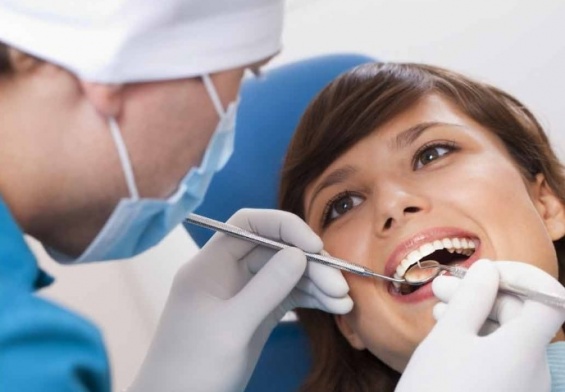
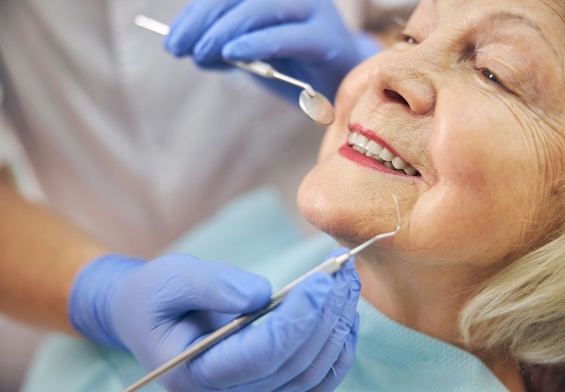
During a thorough dental cleaning and exam, hygienists can usually tell which parts of a home routine are being rushed. Plaque near the gum line, bleeding spots, and heavy buildup between teeth often point to missed brushing angles, skipped flossing, or a rinse being used as a shortcut.
What Mouthwash Does and Does Not Do
Mouthwash can freshen breath, reduce bacteria, and support cavity or gum care. The benefit depends on the formula. Some rinses contain fluoride. Some contain ingredients used for plaque, gingivitis, or bad breath, such as cetylpyridinium chloride, chlorhexidine, or essential oils. Others are made for dry mouth, oral pain, or whitening.
The ADA separates mouthwash into two broad groups: cosmetic and therapeutic. Cosmetic rinses mainly mask breath odor for a short time. Therapeutic rinses contain active ingredients meant to help with problems such as plaque, gingivitis, tooth decay, dry mouth, or oral odor. What mouthwash cannot do is scrub. Plaque is sticky. A toothbrush, floss, or interdental brush has to touch the surface to break it up. Liquid can move around teeth, but it cannot scrape film from tight contact points the way floss can.
Fluoride Mouthwash and the Timing Problem
Using a fluoride rinse right after brushing does not double the benefit. It can wash away the concentrated fluoride from toothpaste before it has enough contact time. That is why a midday rinse often makes more sense than a rinse at the bathroom sink right after brushing. Heres what a good schedule looks like: brush in the morning, spit, and do not rinse. Use fluoride mouthwash later in the day. Brush again before bed, spit, and let toothpaste be the last product on your teeth.
The Case for Using Mouthwash After Brushing
There are times when mouthwash after brushing makes sense. This is more common with antibacterial rinses than with fluoride rinses. Brushing first clears food debris and breaks up some plaque. The rinse can then move along the gum line and between teeth. For people managing gingivitis or periodontal issues, a dentist may recommend that order so the rinse contacts cleaner tooth and gum surfaces.
Prescription rinses need more care. Chlorhexidine, for example, can be useful in certain cases, but the ADA notes that it may cause staining or taste changes. Use it only the way a dentist directs.
Why Rinsing Right After Brushing Can Backfire
Mouthwash in not always harmful, but it can be depending on when you use it. After brushing, toothpaste leaves concentrated fluoride behind. Water, alcohol-based rinse, and even fluoride rinse can reduce that leftover layer if used immediately. If you brush well and then rinse hard, you may remove part of what you just put on your teeth.
People with higher cavity risk have the most to lose. Dry mouth, frequent acidic drinks, exposed roots, worn enamel, and a history of cavities all make fluoride contact more important. For those patients, spitting without rinsing is one of the easiest habit changes to make.
When Using Mouthwash Before Brushing Makes Sense
Using mouthwash before brushing can be a good compromise. The rinse comes first. The toothbrush and fluoride toothpaste come second. You can freshen your mouth or loosen debris first, then finish with toothpaste on the enamel. Nothing washes the fluoride away at the end.
In practice, the routine is simple. Rinse first if you want to use mouthwash. Clean between the teeth. Brush with fluoride toothpaste for two minutes. Spit, and stop. Whens someone has a solid general dentistry routine, they typically know which habits to have in which order, and which habits simply need consistency. Mouthwash is one of the few daily products where the sequence can change the result.
How to Use Mouthwash Correctly for the Best Results
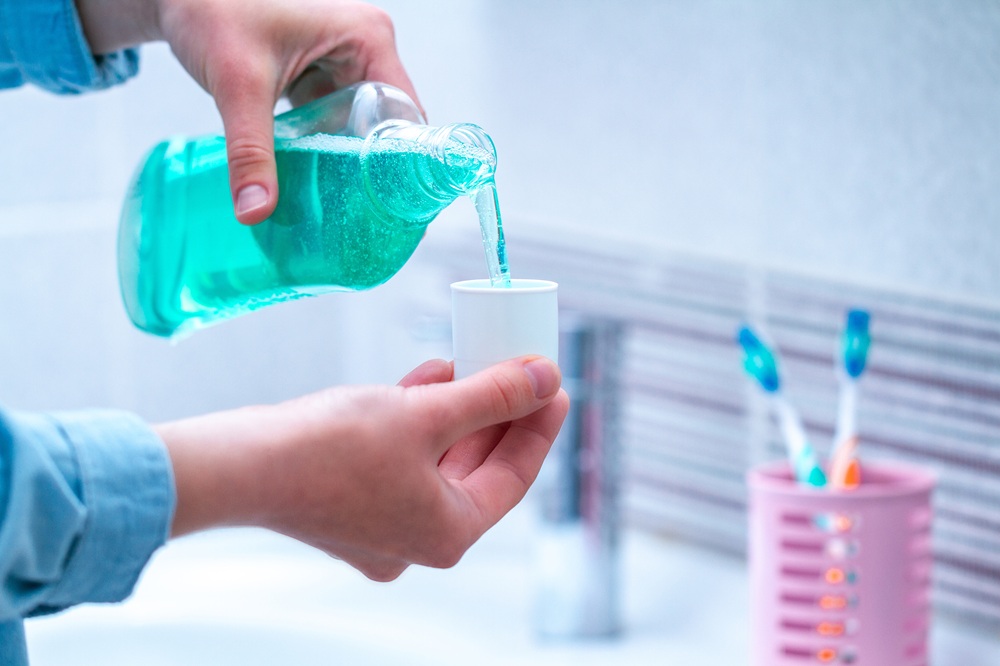
Most mouthwash mistakes are small. People use too little, swish for only a few seconds, or assume the strongest burn means the best clean. Start with the label. Many adult rinses use about 20ml, but the product directions matter. Fill the cap to the marked line, swish for the listed time, and spit fully. Do not swallow it. Aim the swish where the rinse can help most. Move it around the back teeth, along the gum line, and through the spaces between teeth. A lazy rinse over the tongue will freshen breath, but it will not do much for the areas that collect plaque.
How Much Mouthwash to Use
Filling the cap to the line is enough. More mouthwash does not mean more protection. Using too much raises the chance of swallowing active ingredients, especially in homes with children. It can also irritate sensitive tissue, depending on the formula.
After using fluoride mouthwash, avoid food and drink for 30 minutes. NHS guidance gives the same 30-minute wait after fluoride mouthwash. For non-fluoride rinses, follow the bottle or your dentist’s instructions. These habits connect to complete health dentistry, which treats oral care as part of whole-body health. The CDC notes that high blood sugar can make gum disease more severe and slower to heal. Gum disease may also make diabetes harder to manage.
Good mouthwash habits can also support the effort of keeping your gums healthy between visits. A rinse used at the right time can reduce bacteria at the gum line. It just cannot do the mechanical work of brushing or flossing.
Questions Patients Often Ask
Does mouthwash replace flossing?
No. Floss reaches the contact point where two teeth touch. Mouthwash can flow around that area, but it cannot scrape plaque off the tooth surface. That is why people who use mouthwash every day can still bleed when they floss. The rinse may help with bacteria. It does not remove the sticky film trapped between teeth.
Is alcohol-based mouthwash bad for your teeth?
Not automatically. Alcohol-based mouthwash can be fine for some people. It deserves a second look if your mouth feels dry, irritated, or more sensitive after use. Saliva helps buffer acid and protect enamel. For people with dry mouth, the ADA says an alcohol-free mouthwash may be a better choice because alcohol can be drying. If dry mouth is already a problem, ask a dentist about rinses made for saliva support.
Can children use mouthwash?
Children younger than six should not use mouthwash unless a dentist directs it. The ADA warns that young children may swallow large amounts because their swallowing reflexes are not fully developed. Older children may use fluoride mouthwash with adult supervision when a dentist recommends it. Many kids do not need it. Brushing with fluoride toothpaste and cleaning between teeth usually matter more.
What to Change Starting Tomorrow
If you use mouthwash right after brushing, it might be time to change up your routine. This kind of change may make your toothpaste more effective. Use mouthwash before brushing if you like the clean feeling. Or save it for after lunch. At night, brush with fluoride toothpaste, spit, and let that be the final step. Of course a habit change will feel strange at first, because most people want to rinse after brushing. Give it time. Once the routine feels normal, each product’s job will feel clearer. Mouthwash helps where it can, and toothpaste leaves fluoride where your teeth need it.
Sources
NHS, How to Keep Your Teeth Clean
American Dental Association, Mouthrinse (Mouthwash)