
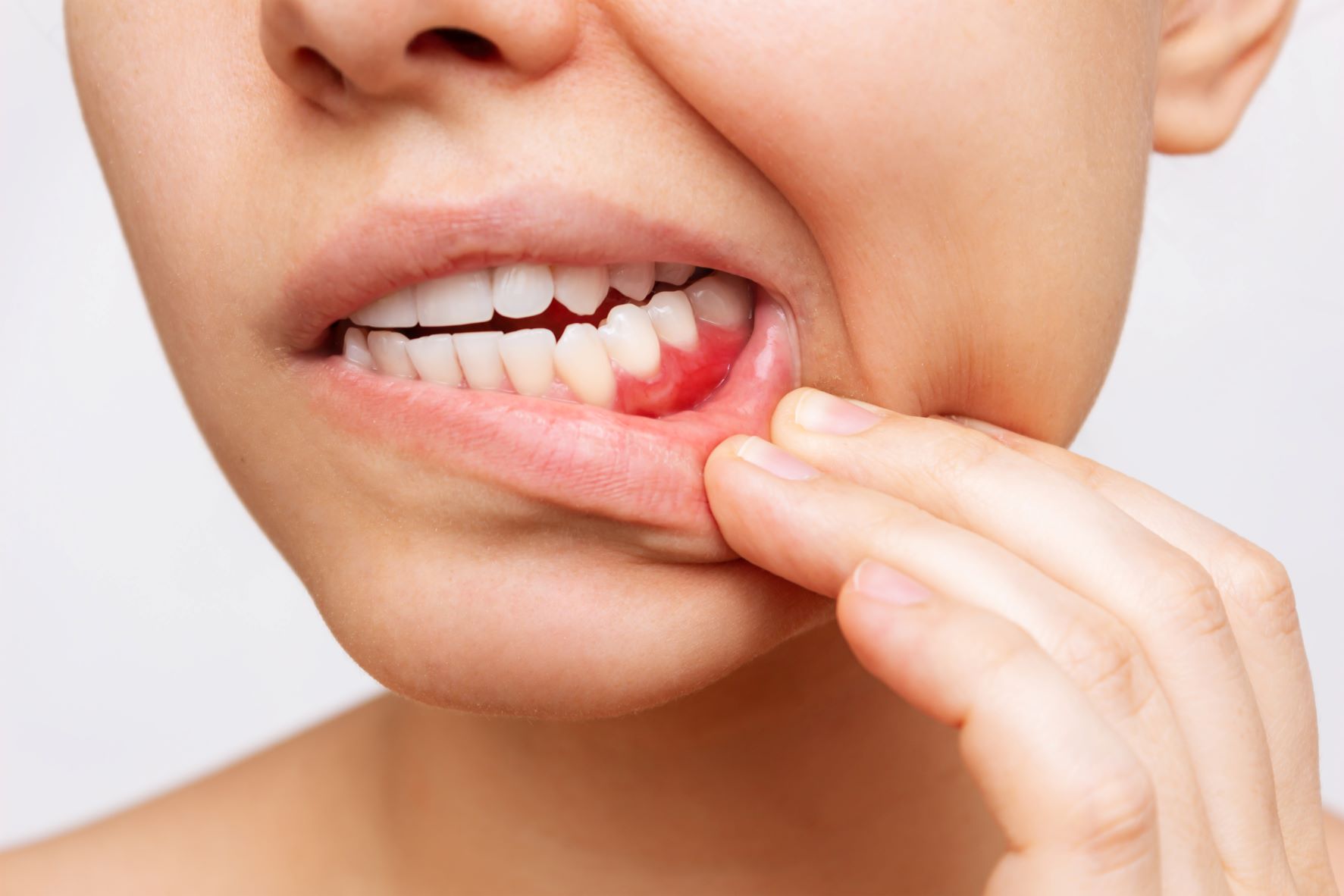
Most people don’t notice their receding gums until they’re well advanced. Teeth might start to look longer, and cold drinks might zing in a way they didn’t used to. When those signs become clear, the tissue has usually already pulled back, sometimes by several millimeters. That can lead to tooth sensitivity and a host of other problems, so if you’ve been experiencing sudden tooth sensitivity, recession is one of the most common reasons.
What Are Receding Gums?
Gum recession happens when the gum tissue surrounding a tooth pulls away from the surface, exposing the root underneath. Unlike the crown of the tooth, which is protected by hard enamel, roots are covered by cementum, a much softer material that wears down easily and has no protective coating against temperature, acid, or bacteria.
Once gum tissue is lost, it does not grow back on its own. Treatment focuses on stopping the recession from progressing and, where possible, surgically restoring coverage over exposed roots.
The Most Common Causes of Gum Recession
Usually, either mechanical damage affects the tissue itself, or biological disease damages the structures holding the gums in place. It’s common for both to happen at the same time for many patients, which is part of why it goes unnoticed for so long.
The Causes You Can Control
Aggressive brushing is the most common mechanical cause of receding gums. A hard-bristled brush or scrubbing too hard physically abrades the cementum over time, wearing away the gumline from the outside in. Switching to a soft-bristle brush and using lighter circular strokes is one of the most direct fixes.
Poor oral hygiene leads to plaque and tartar accumulation along the gumline. That buildup triggers inflammation, which can progress into gingivitis if it’s not addressed. Gingivitis then becomes periodontitis, a deeper infection that destroys bone and connective tissue between gums and teeth. Periodontitis is the leading cause of recession in adults.
Tobacco use reduces blood flow to gum tissue and significantly impairs the body’s ability to fight infection. Smokers develop recession faster and respond less well to treatment than non-smokers, which is why tobacco history is always part of a periodontal evaluation.
Teeth grinding puts repeated abnormal forces on the gumline. Over time, that pressure drives recession from the crown down, often in a distinctive wedge pattern near the base of the tooth.
The Causes You Can’t Control
There are certain causes that remain outside of your control. Genetics could lead your body to have naturally thin gum tissue, for example. Thin tissue has less volume to begin with, so smaller amounts of recession have larger proportional effects.
Tooth position plays a role as well. Teeth sitting outside the natural arch of the jaw have thinner overlying bone, which makes recession more likely regardless of brushing habits.
Hormonal changes during puberty, pregnancy, and menopause affect how gum tissue responds to bacteria. The tissue becomes more reactive during these periods.
Prior orthodontic treatment can cause recession if teeth are moved outside the boundaries of the supporting bone, either during treatment or after.
Warning Signs Your Receding Gums Need Attention
Recession moves slowly enough that most people adapt to early signs without connecting them to a worsening problem. The most common indicators include:
- Teeth that look visually longer than they used to, usually the first sign patients notice
- A notch or groove near the gumline you can feel with your tongue — this is exposed cementum, and it has a different texture than enamel
- Increased sensitivity to cold, heat, or sweet foods, caused by open dentinal tubules in the exposed root leading directly to the nerve
- Visible root surface that looks darker or more yellow than the rest of the tooth, because cementum is thinner and more translucent than enamel and picks up staining more easily
If more than one of these is present, a periodontal evaluation is the right next step.
Can Receding Gums Grow Back?
No.
Gum tissue does not regenerate on its own. Home remedies, oil pulling, vitamin supplements, and gum-strengthening toothpastes will not reverse recession. They can only support the remaining tissue.
But it is possible to stop recession from getting worse by eliminating the drivers and surgically grafting new tissue to cover exposed roots when appropriate.
What a Dentist Can Actually Do
Early Stage: Scaling, Root Planing, and Behavior Change
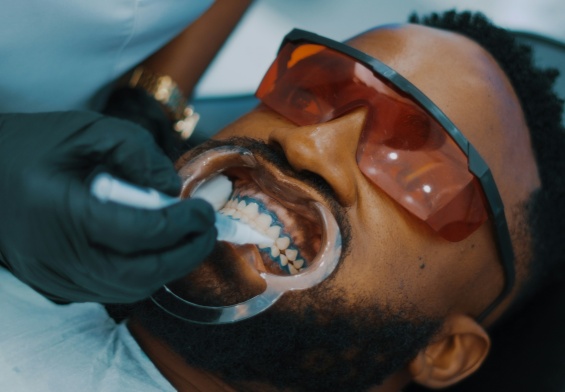
When plaque, tartar, and early gum disease drive gum recession, the first professional intervention is scaling and root planing. A professional cleaning that goes below the gumline removes deposits that regular brushing and flossing cannot reach, and root planing smooths the root surface so gum tissue can reattach more effectively.
The main goal at this stage is stopping further progression. That usually requires addressing the patient’s own behavioral habits alongside in-office treatments: switching to a soft-bristle brush, correcting technique, fitting a night guard if grinding is contributing, and maintaining cleanings every three to four months.
Advanced Stage: Gum Grafting and Regenerative Options
When recession is significant enough that root exposure is causing sensitivity, increasing decay risk, or creating an aesthetic concern, grafting is the standard of care.
The most common procedure is a connective tissue graft, in which a small amount of tissue is taken from the roof of the mouth and sutured over the exposed root. This adds both volume and coverage. Free gingival grafts are used when the goal is to increase the thickness of existing tissue rather than cover a root. Allograft options use donor tissue rather than the patient’s own palate, which avoids a second surgical site.
The biologic approach to gum treatment at Garden State Dental Design incorporates PRGF Endoret, Plasma Rich in Growth Factors, as part of the grafting protocol. PRGF is derived from the patient’s own blood and applied at the surgical site to speed up healing and improve graft integration. It is a regenerative addition to the standard procedure.
In severe cases where bone support has already been compromised, long-term treatment planning may also include whether the tooth can realistically be retained. Where teeth are eventually lost to advanced recession-related bone loss, dental implants integrate directly with the remaining jawbone and are typically the most structurally stable replacement option.
Preventing Receding Gums Before They Start
Most recession is preventable. The problem is that the interventions feel too minor to bother with until something goes wrong.
Use a soft-bristle brush. Soft bristles clean effectively without the mechanical abrasion that wears down cementum over time. Medium and hard bristles offer no cleaning advantage and cause measurable damage over years of daily use.
Keep up with professional cleanings. The plaque that hardens into tartar below the gumline cannot be removed at home. Regular cleanings prevent the accumulation that leads to gingivitis and periodontitis, the most common biological drivers of recession.
Address grinding early. A night guard removes the repeated abnormal force from the gumline before it causes structural damage. But that’s a minor inconvenience compared to graft surgery.
Do not dismiss early symptoms. Sensitivity and slight tooth lengthening are the window for conservative treatment. Once recession reaches the bone, options narrow and treatment becomes more involved.
If you have already noticed these signs, a periodontal evaluation at Garden State Dental Design can show how far the recession has progressed and whether the issue is mainly behavioral, periodontal, or already at the point where grafting needs to be discussed. That distinction changes the treatment plan significantly, and booking a consultation at the Clark or Millburn office is the only way to know which category you are in.
Frequently Asked Questions
Is gum recession reversible?
No. Lost gum tissue does not grow back without surgical intervention. Treatment focuses on stopping further recession and, where appropriate, covering exposed roots through grafting.
What does gum recession feel like?
Most patients notice increased sensitivity to cold or sweet foods before they see any visible change. A groove or notch near the gumline is often the first physical sign, followed by teeth that start to look longer than they used to.
Does gum grafting hurt?
The procedure is performed under local anesthetic and is not painful during treatment. Most patients experience soreness at the graft site and the donor site on the roof of the mouth for several days afterward, usually managed with over-the-counter pain relief. Recovery typically takes one to two weeks.
How long does gum grafting recovery take?
Most patients feel the most discomfort during the first few days, then improve steadily over one to two weeks. The exact timeline depends on the graft type, whether donor tissue was taken from the palate, and how much tissue was treated.
Is aggressive brushing really that damaging?
More so than most patients expect. Daily abrasion from a hard brush compounds over years, and the damage is cumulative and irreversible. Switching to a soft-bristle brush is one of the simplest protective changes a patient can make.
What Usually Decides How Serious It Is
The causes are divided into what you can change, like brushing habits, oral hygiene, tobacco use, and grinding, and what you cannot, like genetics and tooth position.
What you can always control is how early you catch it.
Sources
- Cleveland Clinic. Gum Recession: Causes, Prevention, Surgery & Treatment (2024). https://my.clevelandclinic.org/health/diseases/22753-gum-recession
- Cleveland Clinic. Gum Graft Surgery: What It Is, Procedure & Recovery (2024). https://my.clevelandclinic.org/health/treatments/23504-gum-graft-surgery
- American Academy of Periodontology. Surgical Procedures — Gum Graft Surgery. https://www.perio.org/for-patients/periodontal-treatments-and-procedures/surgical-procedures/
- CDC. About Oral Health (2024). https://www.cdc.gov/oral-health/about/index.html