
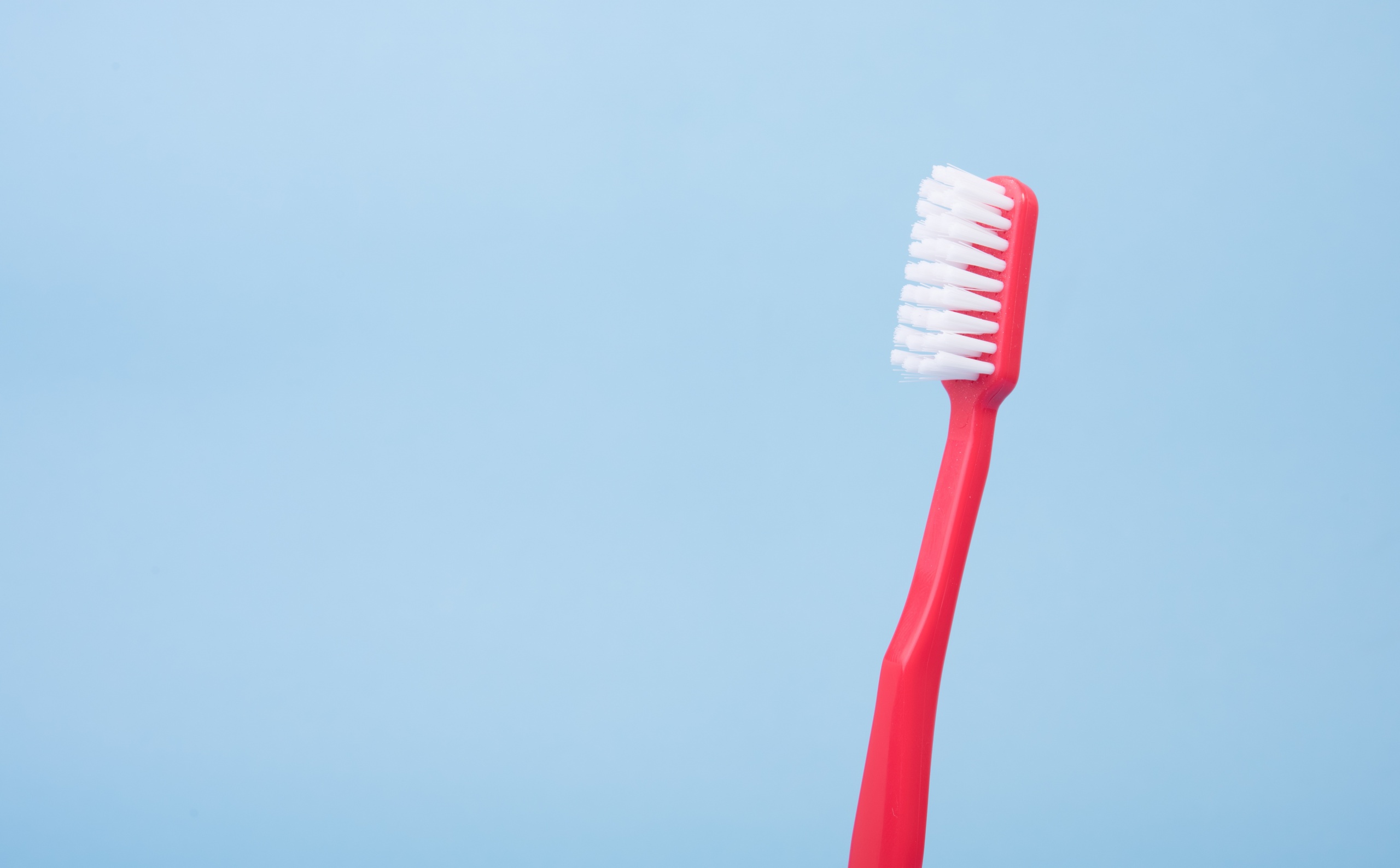
The toothbrush aisle presents what feels like a minor choice: soft, medium, or hard bristles. Most people grab whatever is on sale or whatever they’re used to. But this seemingly insignificant distinction carries serious consequences for gum and enamel health.
Aggressive brushing with the wrong bristle type is one of the leading causes of receding gums, and that damage is cumulative and irreversible. The damage occurs incrementally and doesn’t register on a day-to-day basis. It shows up all at once when a dentist tells you your gums have pulled back significantly.
Should You Use A Soft or Medium Toothbrush?
Soft.
The American Dental Association recommends soft bristles for adults. The ADA’s patient guidance is direct: “Firm or even medium-strength bristles may cause damage to your gums and enamel.” Medium/hard bristles don’t offer enough of a cleaning advantage to offset the potential damage. The only real exception is someone whose dentist has given them a clinical reason to deviate.
What the Bristle Ratings Actually Mean
The labels soft, medium, and hard describe bristle stiffness, but there is no industry-wide standard for what those words mean. One manufacturer’s soft brush can be stiffer than another manufacturer’s medium. The rating reflects the bristle material, diameter, and tip shape, all of which affect how much abrasive force reaches the gum tissue and enamel.
Why There Is No Industry Standard
Bristle hardness ratings are self-reported by manufacturers. The ADA Seal of Acceptance evaluates whether a brush is safe and effective for plaque removal and gingivitis reduction. Brands have their own individual hardness scales. What one brand considers a soft brush may be meaningfully stiffer than one from another brand. If your gums are becoming more sensitive after switching brands, this is a probable cause.
What Hard and Medium Bristles Do to Gum Tissue
Repeated mechanical abrasion from stiffer bristles causes two types of damage over time. It erodes enamel at the cervical margin, the narrow zone where the tooth meets the gum. Hard bristles also cause gingival recession, where gum tissue pulls away from the tooth surface. Both forms of damage are permanent and are hardly noticeable until a dentist points them out. Gum bleeding during brushing is often the first sign that bristle stiffness or technique is already doing damage.
The Pressure Problem
Bristle hardness is only half the equation. A patient brushing with moderate pressure using a medium brush is doing more damage than one brushing firmly with a soft brush. Clinical evidence and ADA guidance both support the same conclusion: brushing technique, including pressure, angle, and motion pattern, accounts for as much gum damage as bristle hardness. Two things drive this: soft bristles buffer the mechanical force patients are applying, and people tend to scrub harder when they feel like the bristles are not doing enough.
Soft or Medium Toothbrush: Does It Change for Electric vs. Manual?
Electric toothbrush heads are almost universally designed for soft bristles. The oscillating or sonic motion of the brush generates its own mechanical force, so the bristles do not need to be stiff. Using a medium or hard head on a powered brush significantly amplifies the abrasive force at the gum margin, more so than the same bristle hardness would on a manual brush.
For electric toothbrush users, the case for soft bristles is even stronger than for manual users. Treating brushing habits as part of a larger, more complete health approach to dentistry connects daily hygiene choices to longer-term clinical outcomes.
Who Might Actually Need a Medium Bristle
The honest answer is almost nobody, for routine daily oral hygiene. Medium bristles are occasionally used for specialized tasks like denture cleaning or removing certain types of heavy staining, but these are not daily brushing contexts. A small number of patients with very thick keratinized gum tissue, no history of recession, and no sensitivity may tolerate medium bristles without measurable harm over time, but that is a clinical determination that needs to come from their own dentist.
Children deserve separate consideration. The ADA recommends soft-bristle brushes from the first tooth onward, with extra-soft options often preferable for very young children. The habits built during family dental care and at home in childhood tend to persist into adulthood. That’s why it’s always a better idea to start with the right brush instead of changing stiffness levels later.
What Dentists Recommend and Why
The ADA’s recommendation is soft bristles for all adults, without exceptions for general use. Soft bristles are clinically equivalent to stiffer ones for plaque removal when used with proper technique, and they produce significantly less tissue and enamel damage over a lifetime of daily use.
Patients assume harder bristles clean better, which is understandable. But there isn’t much clinical dental research to support that assumption. Plaque is a biofilm that’s easy to disrupt mechanically, so removing it doesn’t require hard bristles. Soft bristles flex at the gumline and in the spaces between teeth, which actually increases contact with the plaque that forms in those areas.
No matter which bristle type you use, professional dental cleanings remove what brushing alone cannot: the subgingival tartar that accumulates below the gumline and drives the gum disease that causes recession in the first place.
When to Ask Your Dentist Directly
Certain situations call for a direct conversation about bristle choice. Post-surgical patients recovering from gum grafts or extractions often need ultra-soft options for specific areas while healing. Patients with active recession or exposed roots may benefit from extra-soft bristles rather than standard soft. Anyone using prescription fluoride toothpaste or taking medications that affect gum tissue should check with their dentist about whether bristle type needs adjustment — and knowing what to avoid before a dentist appointment helps make that conversation more productive. The default is still soft in most of these cases, but the specifics vary.
The Soft Toothbrush Myth Worth Clearing Up
The most persistent objection to soft bristles is that they do not clean as well. There’s very little clinical evidence supporting this. Toothbrushes clean via motion, angle, and time spent on the surface, not the stiffness of the bristles. Soft bristles flex at the gumline in ways that stiffer bristles cannot, making them more effective at cleaning the cervical margin, the exact location where cavities and gum disease most commonly begin.
The best indicator of whether you are cleaning effectively is not how your teeth feel when you are done. It is whether plaque is being removed consistently from the right surfaces with the right technique. For most patients, that means following the two minutes, twice a day standard, with a soft-bristle brush held at a 45-degree angle to the gumline. A general dentistry appointment is still the clearest way to find out whether your current routine is actually doing what you think it is.
Frequently Asked Questions
Is a soft toothbrush as effective as a medium one for removing plaque?
Yes. Clinical evidence shows no meaningful difference in plaque removal between soft and medium bristles when brushing technique is controlled. The ADA explicitly states that soft bristles perform comparably to stiffer options while significantly reducing the risk of tissue and enamel damage.
How often should you replace a toothbrush?
Every three to four months, or sooner if the bristles are visibly frayed or matted. A worn brush cleans less effectively and can have jagged bristle tips that cause more tissue irritation than a new one.
Does electric or manual make a bigger difference than soft vs. medium?
Both choices are independent variables. An electric brush with soft bristles is better than a manual brush with medium bristles. A manual brush with soft bristles and good technique beats an electric brush with medium bristles and poor pressure control. Bristle hardness is the same consideration regardless of brush type.
What does it mean if your toothbrush bristles fray quickly?
Usually, it means you are brushing with too much pressure, brushing too long, or both. Fast-fraying bristles are often the first physical sign that technique is doing more damage than the patient realizes. If a soft brush looks flattened after only a short time, pressure is usually the problem.
Is there a difference between soft and extra-soft toothbrushes?
Yes. Extra-soft brushes are usually recommended for patients with recent gum surgery, active recession, exposed roots, or unusually sensitive tissue. For routine daily brushing, standard soft is still the default recommendation for most adults unless a dentist tells you otherwise.
Are Soft Toothbrushes Right for You?
Medium bristles provide no cleaning advantage and carry a measurable long-term risk of gum and enamel damage that accumulates silently over years of daily use. The bigger variable most patients overlook is technique. Pressure, angle, and time on each surface account for as much tissue damage as bristle choice. A soft brush used correctly will outperform a medium brush used carelessly every time.
Sources
- MouthHealthy (ADA). Toothbrushes. https://www.mouthhealthy.org/all-topics-a-z/toothbrushes
- MouthHealthy (ADA). Brushing Your Teeth. https://www.mouthhealthy.org/all-topics-a-z/brushing-your-teeth/
- CDC. About Oral Health (2024). https://www.cdc.gov/oral-health/about/index.html