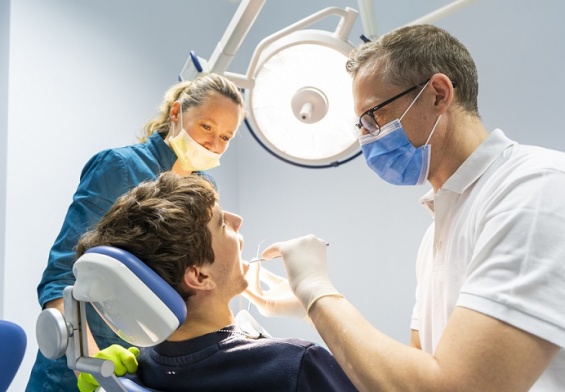

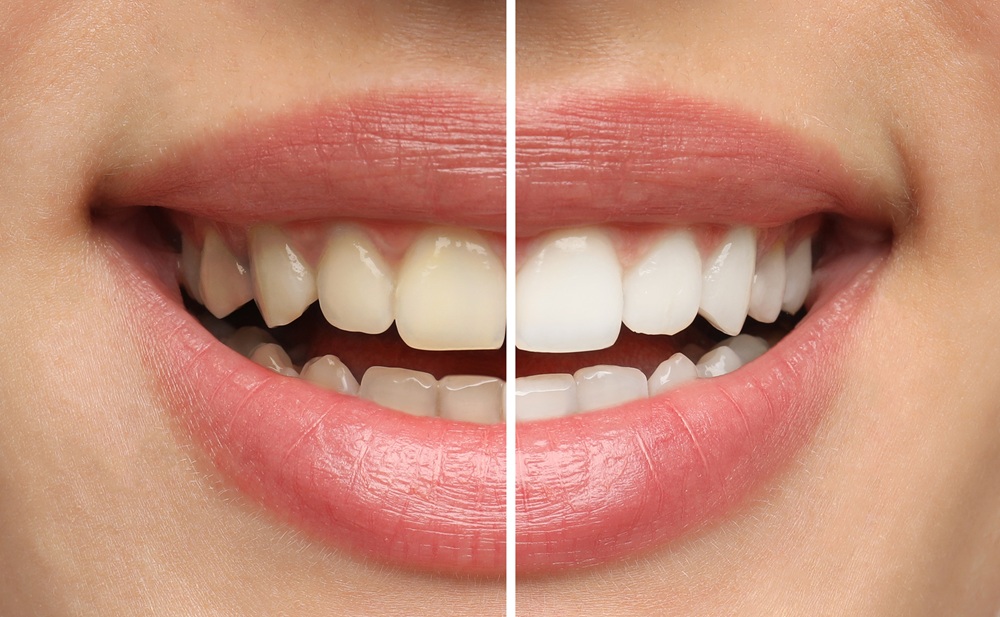
For patients who have spent years skipping whitening because their teeth already hurt with cold water, that caution is earned. Teeth whitening for sensitive teeth is not a contradiction. It is a protocol question. The pain from strips or over-the-counter trays comes from peroxide concentration and exposure time. The concentration can be dialed back. Patients coming in for a professional whitening appointment almost always start with a sensitivity history.
Why Teeth Whitening for Sensitive Teeth Causes Pain
What Peroxide Does Inside the Tooth
Hydrogen peroxide does not just sit on the surface of the tooth. It penetrates the enamel and reaches the dentin layer underneath. Tiny tubules in that layer run toward the nerve at the center of the tooth. When peroxide gets into those tubules, it temporarily dehydrates the dentin and irritates the pulp. The sharp, shooting sensation patients describe after whitening, cold air, cold water, even breathing through the mouth, comes from that temporary dehydration.
Higher concentrations move faster and deeper. In-office whitening uses 25 to 40 percent gel. Whitening at that concentration can produce sensitivity in patients who had no trouble with a 10 percent take-home system. The sensitivity usually resolves within 24 to 48 hours as the dentin rehydrates. For patients with healthy, thick enamel and no recession, the 24 to 48 hour window is the whole of it. Those with thin enamel or exposed root surfaces find the same protocol produces more sensitivity and takes longer to clear.
Thin Enamel and Recession: Who Ends Up More Sensitive
Before whitening is even scheduled, knowing what causes sensitive teeth helps clarify whether the sensitivity is structural or situational. Structural causes, including gum recession and enamel erosion from grinding, create a baseline that whitening amplifies. Situational causes are different. A recently placed filling or temporary inflammation usually clears before whitening comes back up.
Root surfaces have no enamel at all.
When recession leaves the root exposed, peroxide reaches the dentin with nothing slowing it down. Sensitivity along the gumline rather than at the tooth tips usually points to root exposure. Those patients need a lower concentration and shorter contact time than someone with full enamel coverage.
The Safest Methods for Teeth Whitening for Sensitive Teeth
Professional In-Office Whitening with Desensitizing Agents
In-office whitening with a dentist who knows the patient’s sensitivity history is the most controlled approach available. Before the gel goes on, the dentist applies a protective barrier to the gums. The barrier prevents peroxide from contacting soft tissue, which cuts out one of the most consistent causes of post-treatment pain. Many practices follow the session with a fluoride or potassium nitrate gel. Potassium nitrate calms the nerve endings inside the dentin tubules. It does not seal them but it does blunt how hard the nerve fires.
Another advantage is that the dentist can stop. An at-home patient who starts feeling discomfort 40 minutes into wearing a tray has to make that call alone. A dentist monitoring the session can cut it short and apply desensitizer immediately.
Custom Take-Home Trays with Low-Concentration Gel
Custom trays made from a dental impression fit against the teeth without pooling excess gel along the gumline. The difference from boil-and-bite trays and strip-based systems is where the gel ends up. Custom trays keep it on tooth surfaces; generic ones spread it against gum tissue. Carbamide peroxide in the 10 to 16 percent range breaks down more slowly than hydrogen peroxide.
Whitening happens gradually over two to three weeks.
For patients with moderate sensitivity, this is often the most practical path. Wear time can be reduced if sensitivity picks up. The lower-concentration take-home route produces less discomfort for sensitive patients. In-office and take-home protocols differ, and patients should be prepared to ask questions before the first session.
PAP-Based and Peroxide-Free Options
PAP does not work the way peroxide does. Instead of penetrating the dentin, it oxidizes stain molecules at the surface. Less penetration is why it causes less sensitivity, and also why it cannot reach deeper staining. PAP handles mild to moderate surface staining well but falls short on deeper intrinsic discoloration. Years of coffee, tea, or certain medications leave stains PAP cannot fully reach.
Patients asking about material biocompatibility often land on PAP as the alternative to peroxide. Newfound interest in biocompatible dental materials has brought more patients to these systems. For patients who want to avoid peroxide entirely, PAP is a genuine option for surface staining.
At-Home Products: What Works and What Does Not
Whitening strips with lower peroxide concentrations, around 5 percent, are the most accessible starting point for mild sensitivity. Half the recommended application time is a reasonable first session. If teeth handle it without significant discomfort, the full duration can be worked up over a few sessions. Potassium nitrate toothpaste used twice daily in the two weeks before whitening begins reduces baseline sensitivity.
What does not work well for sensitive patients is any gel tray bought without a dental impression. Generic trays gap at the edges. The agent spreads onto gum tissue and creates irritation that has nothing to do with the peroxide concentration on the label.
What to Tell Your Dentist Before Teeth Whitening for Sensitive Teeth
Whether cold drinks, sweet foods, or something spontaneous provokes the sensitivity tells the dentist more than a general complaint. How long it lasts after a trigger narrows down whether the nerve is mildly irritated or more significantly inflamed. Past whitening attempts and exactly how the teeth responded give the dentist a starting concentration and a realistic schedule.
Existing restorations need to come up before the dentist quotes a treatment. Crowns, veneers, and bonding do not respond to whitening gel the way enamel does. The shade is fixed at placement. A dentist planning whitening needs to know what restorations are present and where. The goal is landing the natural teeth at a shade that matches them rather than overshooting. For patients planning veneers, bonding, or other cosmetic work, the whitening needs to come first.
Whitening typically happens before veneers or bonding. New restorations are color-matched to the teeth as they are, so whitening first means a brighter starting point.
FAQ: Teeth Whitening for Sensitive Teeth
Can I use whitening strips if my teeth are sensitive?
Strips at around 5 percent peroxide are workable for mild sensitivity. Start at half the recommended time and build up if teeth tolerate it. For significant recession or severe sensitivity, strips are not the right tool. The fit does not allow enough control over where the gel contacts the mouth.
How long does sensitivity last after whitening?
For most patients, 24 to 48 hours. If it runs past three days, flag it to the dentist before the next session. Either the concentration was too high or the trays were making gum contact. An underlying structural issue is also possible and needs addressing before continuing.
Does whitening make sensitive teeth permanently worse?
No clinical evidence supports that. Professional whitening at the right concentration does not cause lasting nerve damage or permanent sensitivity increase. The sensitivity is dentin dehydration, not nerve damage, and once the tooth rehydrates it stops. Using a system too aggressive for the patient’s baseline is what makes sensitivity linger past the normal window.
Is KöR whitening a good option for sensitive teeth?
KöR was designed around sensitivity management rather than treating it as an afterthought. The gel stays refrigerated until use, which limits peroxide breakdown before it reaches the teeth. Dentists calibrate the protocol per patient rather than running a standard session.
If You Have Sensitive Teeth and Have Only Tried Strips
The first whitening consultation at a practice experienced with sensitive teeth runs differently from what most patients expect. The dentist does not hand over a standard tray kit. Sensitivity history drives the protocol. Which concentration, how long the first session runs, whether desensitizer goes on first. The gap before the second session depends on how the first one went, not a fixed timeline.
Patients who have avoided whitening for years because of pain almost always assumed the sensitivity was the problem. Usually it was the method. A dentist working with a patient’s actual baseline arrives at a different plan. Which teeth hurt, which triggers matter, which concentration the patient can handle: all of that shapes the protocol. The first session at that calibration level is not a guarantee. But it is a different starting point than anything tried before.